Uganda’s large carnivores, including lions, leopards, and African wild dogs have been facing steep declines over the past decades. Lion populations, for example, have dropped from 600 individuals in 2000 to around 300 today. Habitat loss, poaching, and human-wildlife conflict have all contributed to this alarming trend, threatening not only these iconic species but also the delicate balance of Uganda’s ecosystems.
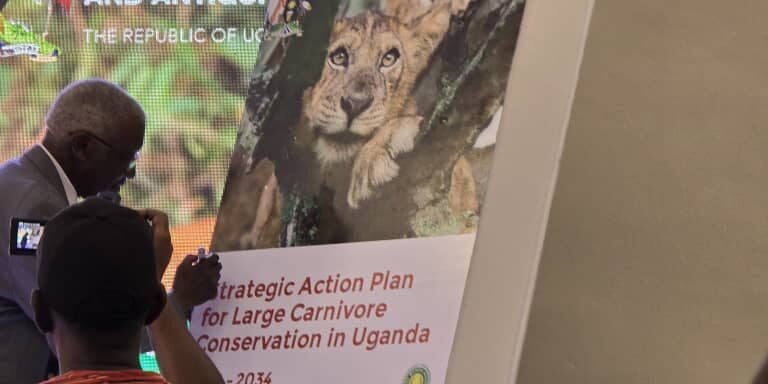
To address this extinction threat, the Uganda Wildlife Authority and the Ministry of Tourism, Wildlife, and Antiquities, with support from the Wildlife Conservation Society (WCS) and other partners, developed the Strategic Action Plan for Large Carnivore Conservation in Uganda (2024–2034) that was launched on February 26, 2025, in Kampala, Uganda. marking a significant step toward protecting lions, leopards, wild dogs, and other iconic carnivore species.
he plan was launched by the Minister of Tourism, Wildlife and Antiquities Hon. Tom Butime in Kampala Uganda, aims for a 30% increase in carnivore populations by 2033.
Speaking during the launch, the Minister noted that, “This plan is essential to preserving Uganda’s natural heritage, a legacy that must be passed on to future generations, it represents a legacy build on cooperation and shared vision to wellbeing of the people and environment”.
“The strategic plan, represents a future where economic progress and environment stewardship go ahead hand in hand, benefiting communities and preserving the natural beauty of Uganda’ the Minister added.
Carnivores are a symbol of Uganda’s national heritage and a major driver of wildlife tourism, a sector that contributes significantly to Uganda’s Gross Domestic Product. In addition, large carnivores are very important in ensuring ecosystem health and balance of nature.